FREE UK SHIPPING OVER £35!

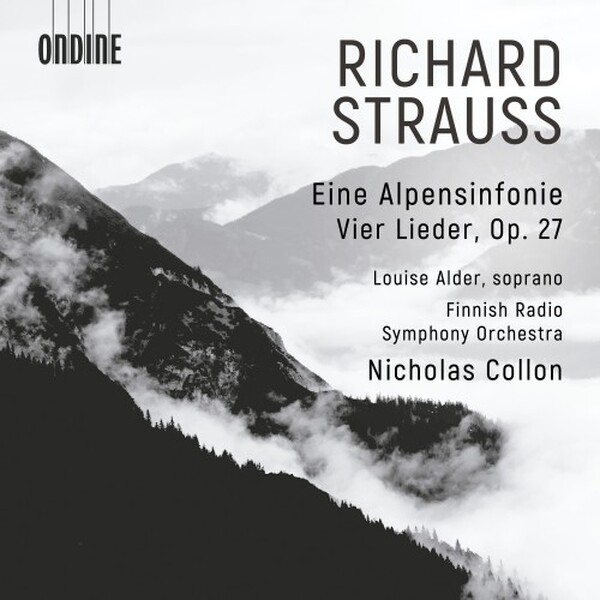
R Strauss - Eine Alpensinfonie, 4 Lieder op.27

The Europadisc Review

R Strauss - Eine Alpensinfonie, 4 Lieder op.27

Nicholas Collon, Louise Alder (soprano), Finnish Radio Symphony Orchestra

£11.41

Although he only took over the reins of the Finnish Radio Symphony Orchestra from Hannu Lintu as recently as 2021, Nicholas Collon has already been making his mark with them in a string of acclaimed recordings on the Ondine label. Collon is best known to British audiences for his work with the Aurora Orchestra, including their hugely successful Proms appearances, performed entirely from memory. As the first non-Finn to be appointed chief conductor of the FRSO, he has burnished his credentials in late-Romantic, 20th-century and contemporary repe... read more

Although he only took over the reins of the Finnish Radio Symphony Orchestra from Hannu Lintu as recently as 2021, Nicholas Collon has already been making his mark with them in a string of acclaimed r... read more

R Strauss - Eine Alpensinfonie, 4 Lieder op.27

R Strauss - Eine Alpensinfonie, 4 Lieder op.27

Nicholas Collon, Louise Alder (soprano), Finnish Radio Symphony Orchestra

Although he only took over the reins of the Finnish Radio Symphony Orchestra from Hannu Lintu as recently as 2021, Nicholas Collon has already been making his mark with them in a string of acclaimed recordings on the Ondine label. Collon is best known to British audiences for his work with the Aurora Orchestra, including their hugely successful Proms appearances, performed entirely from memory. As the first non-Finn to be appointed chief conductor of the FRSO, he has burnished his credentials in late-Romantic, 20th-century and contemporary repertoires, including a widely-praised account of Elgar’s The Dream of Gerontius with combined choral forces from Helsinki and Cambridge.

Now he leads his Finnish players in a disc devoted to one of Elgar’s greatest continental admirers, Richard Strauss. The main work is the vast 1915 tone-poem Eine Alpensinfonie (An Alpine Symphony), which very often appears on its own on a single disc, or coupled with one of the earlier, shorter tone-poems. Here, however, it is paired with the Four Lieder, op.27, originally composed as a wedding gift for Strauss’s wife Pauline in 1894, and later sumptuously orchestrated by Strauss (nos. 1, 2 and 4) and Robert Heger (no.3). The soloist is soprano Louise Alder, whose natural gifts as a Straussian were abundantly clear on her 2017 album ‘Through Life and Love’, accompanied by pianist Joseph Middleton. The same ‘silvery glimmer’ that we noted then is no less evident against the backdrop of a full orchestra, ringing with a bell-like clarity, yet thoughtfully shaped to reflect a lively engagement with the texts.

The opening song, ‘Ruhe, meine Seele!’, opens with sombre tones, yet there’s a transparency to the orchestral textures and a vulnerability to Alder’s tone that are deeply touching. Both ‘Cäcilie’ and ‘Heimliche Aufforderung’ burst into life with rapt gestures and are keenly paced, but the set’s crowning glory is a wonderfully sensitive performance of ‘Morgen!’, in which Alder’s caressing tones are matched by the solo violin playing of Yoonshin Song. This account reinforces our view that the op.27 songs deserve to be known as a set every bit as well as the later, autumnal Four Last Songs.

From the intimacy of the lieder to the vastness of the Alpine Symphony might seem like a huge leap, but in fact Collon’s performance of the latter, while never underselling its more imposing moments, has an athleticism and attention to nuance (particularly balance and dynamics) that makes the coupling surprisingly successful, particularly when recorded by the Ondine team with such warmth and immediacy. From the very early stages, this is a notably purposeful reading, one that revels in the nature-sounds and evocations of the score, but also its glances beyond nature (in such sections as ‘Apparition’, ‘Vision’ and ‘Elegy’).

There have, perhaps, been more vividly conveyed individual sound effects in the ‘Alpine Pasture’ section, but the passage ‘At the Waterfall’ fizzes with energy, and the doggedly determined ‘Entry into the Forest’ and false route ‘Through Thickets and Undergrowth’ pay dividends when we eventually reach the summit, with its seductively swooning string phrases. All the sections of the orchestra deserve praise here, but perhaps above all the highly characterful woodwind, who take this performance beyond the usual sonic spectacular to a work that celebrates both the natural world and human character and resilience.

The way in which Collon maintains the tension forward drive while allowing space for the music’s more poetic elements means that the work’s closing pages emerge as even more touching and intimate than usual. If you’re one of those listeners who still thinks that Eine Alpensinfonie is little more than an exercise in nature-inspired orchestral bombast, you really ought to give this recording a chance. The more spectacular moments are never downplayed, but they are integrated into a cogently expressive and structured musical whole. All in all, this disc provides plenty of reasons to hope that the same team will be tackling more Strauss in the near future!

  • Naxos

The Spin Doctor Europadisc's Weekly Column
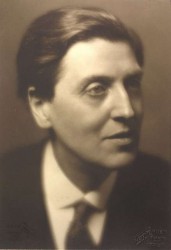
100 Years of Berg’s Wozzeck

100 Years of Berg’s Wozzeck  10th December 2025

10th December 2025

Musicologists and critical theorists would have us acknowledge that there’s no such thing as an ‘uncontested masterpiece’. Nevertheless, I’d argue the case for at least three in early modernist opera: Debussy’s Pelléas et Mélisande (1908), Bartók’s Bluebeard’s Castle (1918), and Alban Berg’s Wozzeck (1925). What’s remarkable about them (as well as being each composer’s first and – in two cases – only opera) is that, alongside the more accessible verism of Puccini and late Romanticism of Richard Strauss, they have each established and maintained a firm place in the international repertoire. Both Pelléas and Bluebeard inhabit the world of early-20th-century symbolism, with an impressionistic soundworld additionally informed, in the latter, by the composer’s fascination with Hungarian folk music. Wozzeck is perhaps the most astonishing of the three, however: its expressionism... read more

View Older Posts

Gramophone Record of the Month

Played on Record Review